Super Mario Kart: a look back at the Super Nintendo classic
With retro gaming trending across social media, Super Mario Kart has returned to the center of attention as one of the SNES defining releases.

By GANM OLS Editorial Team
GANM OLS Editorial
Updated: March 20, 2026 at 07:20 PM
With retro gaming trending across social platforms, Super Mario Kart has once again become a point of curiosity. Released for the Super Nintendo in 1992, the game pioneered the kart-racing subgenre and still serves as a reference point for modern titles. In the sections below, we revisit its history, explain how it works, remember its most iconic drivers and tracks, and point to the legal ways you can still play it today.
From prototype to icon: origins and development
Super Mario Kart began with a simple idea: adapt the F-Zero engine into a game that could support two simultaneous players. The project, led by directors Tadashi Sugiyama and Hideki Konno under the production of Shigeru Miyamoto, started as a prototype featuring generic drivers. The team decided to bring in Mario characters after testing how Mario himself looked inside a kart, and that change immediately made the game more charismatic.
Development leaned heavily on the Super Nintendo's Mode 7 feature, which allowed flat planes to rotate and scale in order to simulate depth. That effect, previously used in F-Zero, gave Super Mario Kart a pseudo-3D feel that was seen as revolutionary at the time. To help with those perspective calculations, the cartridge included a DSP-1 chip, the most popular of the SNES DSP family.
The game first launched in Japan on August 27, 1992. Just a few days later, it arrived in the United States on September 1, 1992. Europe received it on January 21, 1993, and Brazil followed on August 30, 1993. That international rollout helped spread the game's reputation across several regions very quickly.
Gameplay: skills, items, and modes
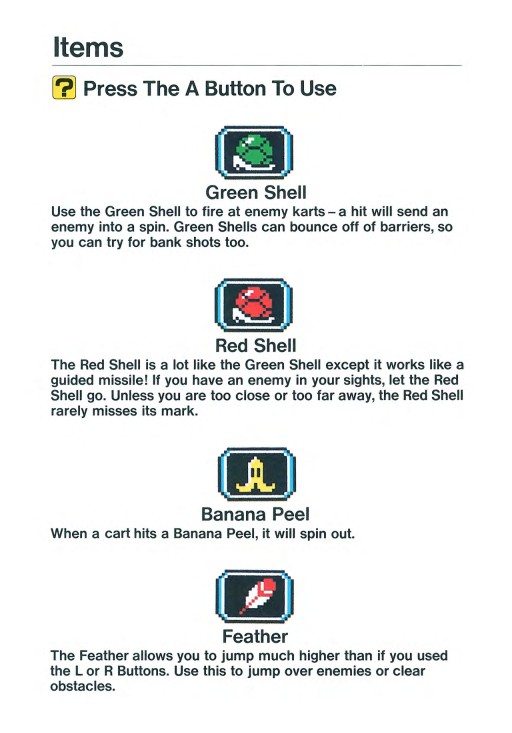
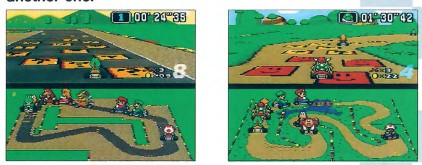
At its core, Super Mario Kart is a kart racer built around fun and player interaction. It offers several modes, including Mario Kart GP, where players race against the computer, and Time Trial, where the goal is to post the best possible lap time. In Grand Prix, players work through a set of cups - Mushroom, Flower, Star, and the hidden Special Cup - across 50cc, 100cc, and 150cc classes while collecting points by finishing well.
To create variety, the tracks include boost panels, ramps, and, most importantly, question blocks that grant temporary power-ups. Shells and bananas are used to disrupt opponents, the Super Star grants a short period of invincibility, and coins raise top speed while helping players keep control after taking a hit. On top of that, the game includes drift-like handling and quick hops that allow tight cornering without losing as much speed.
Battle Mode, meanwhile, places two players inside dedicated arenas. Each competitor begins with three balloons, and the goal is to burst the other player's balloons using the available items. That mode became so popular that it would later return in expanded form throughout the rest of the series.
Character roster
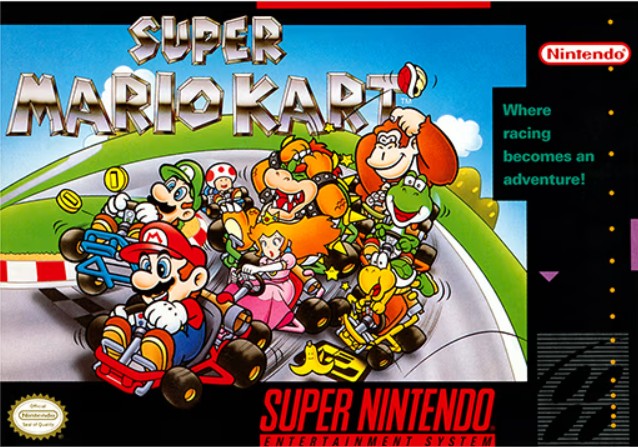
Super Mario Kart includes eight drivers drawn from the Mario universe: Mario, Luigi, Princess Peach, Yoshi, Bowser, Donkey Kong Jr., Koopa Troopa, and Toad. Each racer has different acceleration, speed, and handling values, which creates distinct play styles. The AI-controlled characters also have signature attacks: Yoshi can leave eggs that make rivals drop coins, while Donkey Kong Jr. throws bananas. Contemporary coverage frequently praised the roster balance as one of the game's strengths.
Tracks and cups
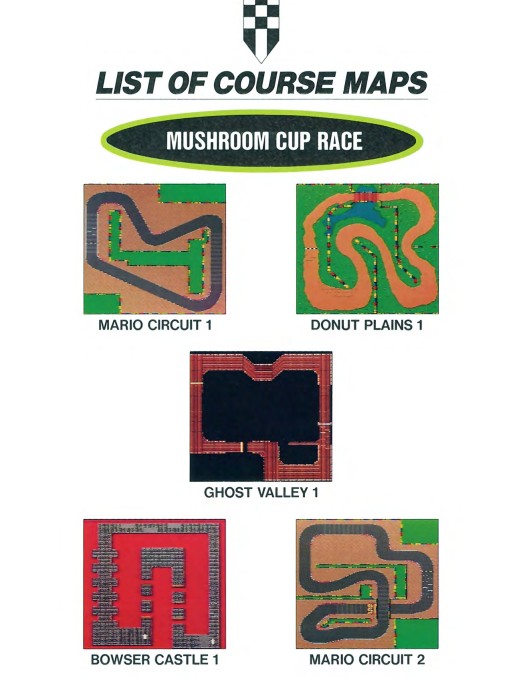
The twenty tracks in Super Mario Kart draw inspiration from locations seen in Super Mario World, including places like Donut Plains. Each of the four main cups contains five circuits, and there are four exclusive arenas for Battle Mode. The tracks feature different corner styles, jumps, and themed hazards, including Thwomps in Bowser's Castle, Cheep-Cheeps in Koopa Beach, and pipe barriers in Mario Circuit layouts. Some courses also include mud that slows the kart and punishes sloppy driving. The overall track design earned widespread praise, with many reviewers highlighting the curve layouts and obstacle use as key reasons the game stayed entertaining over time.
Impact, reception, and legacy
Super Mario Kart was met with strong enthusiasm from critics. The game sold more than 8.76 million copies, making it the fourth best-selling title on the Super Nintendo. It topped the Japanese charts in September 1992 and became one of that year's standout hits. In Europe, it led first-quarter 1993 sales and outperformed competitors such as Sonic the Hedgehog 2. Reviews praised the depth and addictive quality of the gameplay, especially the Battle Mode and the use of Mode 7 technology.
The title did more than inspire later kart racers like Sonic Drift, Street Racer, and Wacky Wheels. It also helped cement the core idea of placing recognizable characters into playful, chaotic races. Numerous all-time-great lists have included Super Mario Kart, and Guinness World Records once referred to it as one of the most impactful console games ever made. In 2019, the game was inducted into the World Video Game Hall of Fame, reinforcing how durable its influence remains.
How to play it officially today
Even though emulators and ROM archives remain easy to find online, downloading unlicensed copies still violates copyright. Fortunately, there are legitimate ways to revisit Super Mario Kart:
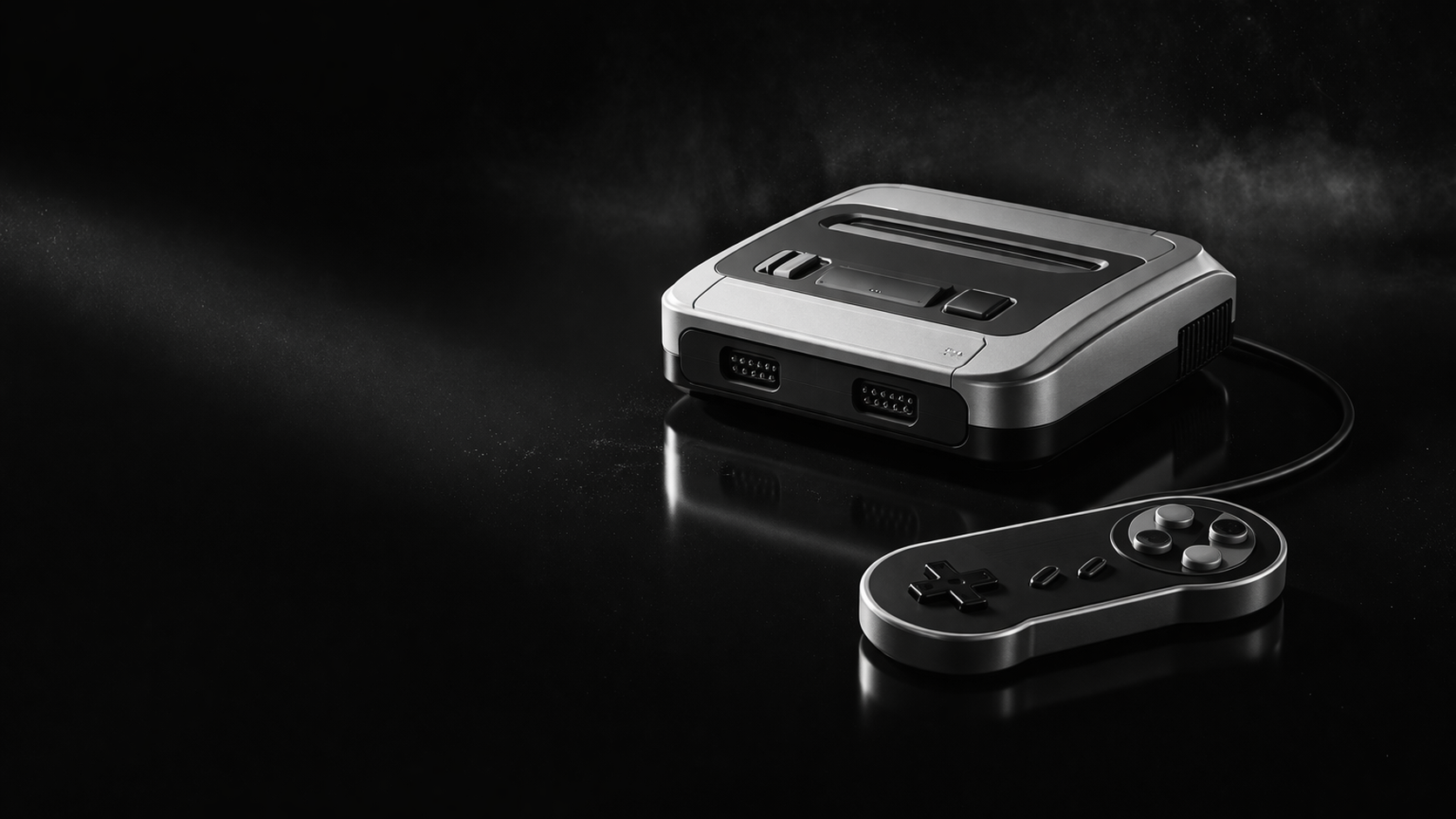
Super NES Classic Edition (2017) - Nintendo's official mini console includes 21 built-in games, among them Super Mario Kart, Super Mario World, The Legend of Zelda: A Link to the Past, and the long-unreleased Star Fox 2. It launched in September 2017 for US$79.99 and ships with two controllers for local sessions.
Nintendo Switch Online / Nintendo Classics - Subscribers can access Nintendo's retro apps, and the Super Nintendo section of Nintendo Classics includes more than 80 games, including Super Mario Kart. These versions support both local and online play, save states, and rewind features.
Original cartridges and retro hardware - For collectors, original carts and Super Nintendo units remain available on the second-hand market. Pricing varies depending on condition, but this remains the most authentic way to play the game on original hardware.
Virtual re-releases - In previous generations, Super Mario Kart was also reissued through services like the Wii and Wii U Virtual Console, along with digital catalogs tied to commemorative collections. Those releases helped make the game more accessible on later Nintendo systems.
The timeless appeal of Super Mario Kart
More than thirty years after launch, Super Mario Kart still has the power to charm players. Its mix of carefully designed tracks, recognizable characters, and unpredictable item use makes every race feel a little different. For new fans who want to understand where the series came from and longtime players looking for nostalgia, revisiting the 1992 classic remains a rewarding experience. More than just a great game, Super Mario Kart is a historical piece that helped define what accessible, joyful racing games would look like for decades.